Buy vs lease commercial property is one of the most important decisions a growing business can make. Your commercial location is more than a place to operate; it can influence overhead costs, staffing plans, customer access, brand image, and long-term financial growth. For many companies, choosing the right space strategy can shape operations for years.
Some businesses benefit from leasing because it protects working capital and allows flexibility. Others prefer ownership because it may create stability, control, and long-term equity. If you are comparing buying vs. leasing commercial property, the right decision usually depends on your business stage, cash reserves, financing options, and future goals.
There is no universal answer. What works well for a mature medical practice may be completely wrong for a startup retailer or growing logistics company. The key is understanding how each option affects both your current operations and long-term strategy.
Leasing Commercial Space: Pros & Cons
Leasing is often attractive for startups, growing companies, and businesses that need room to adapt quickly.
Pros of Leasing
Leasing usually requires less upfront money than purchasing. Instead of a large down payment, many tenants pay a deposit, first month’s rent, and possible build-out costs. That leaves more capital available for payroll, equipment, inventory, technology, or marketing.
Leasing can also make relocation easier. If your company outgrows the location, wants to enter a stronger market, or needs to reduce expenses, moving after the lease term is often simpler than selling owned property.
The U.S. Small Business Administration explains that leasing can be practical for businesses seeking flexibility and lower startup occupancy costs.
Leasing may also give access to premium locations that would be too expensive to purchase outright.
Cons of Leasing
The biggest drawback is that rent payments do not build equity in ownership. At the end of the lease, you may have paid years of occupancy costs without acquiring an asset.
Rent may also rise at renewal depending on market conditions. Some lease structures require tenants to pay taxes, insurance, common area charges, or maintenance costs in addition to base rent.
Investopedia explains that triple-net leases often shift taxes, insurance, and maintenance obligations to the tenant.
You may also face restrictions on renovations, signage, expansion, or the use of the space.
Buying Commercial Property: Pros & Cons
Ownership can be attractive for established companies with predictable revenue and long-term location needs.
Pros of Buying
When you buy, monthly payments can build equity rather than just paying rent. Over time, that ownership interest may become a valuable business asset.
If market values increase, ownership may also create appreciation. In some cases, owners can later refinance, sell, or lease part of the property to generate income.
Owning can provide more control over the space. You may be able to redesign layouts, improve branding, expand facilities, or customize operations without landlord approval.
Fixed-rate financing may also create stable occupancy costs over time.The Federal Reserve has noted that commercial real estate can function as both an operating necessity and a long-term investment asset.
Cons of Buying
Buying typically requires more upfront capital. Down payments, legal fees, inspections, appraisals, lender fees, and closing costs can be significant.
Ownership also means responsibility. Roof repairs, parking lots, HVAC systems, insurance, taxes, code compliance, and general maintenance may all become your responsibility.
Commercial property can also be less liquid than other assets. If business needs change, selling may take time.
Pros / Cons Table
| Option | Pros | Cons |
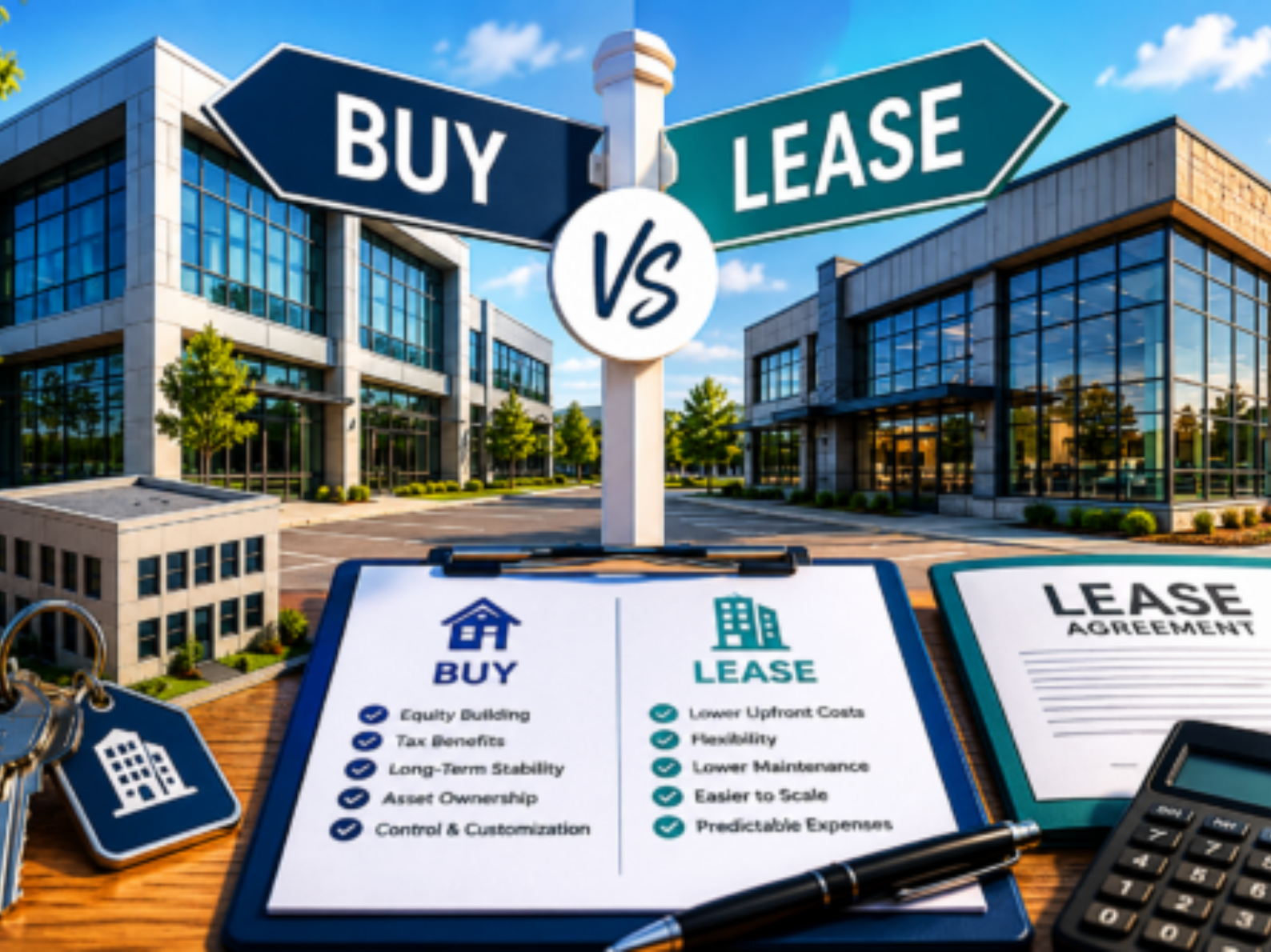
| Leasing | Lower upfront costs, flexibility, easier relocation, and preserves cash flow | No equity, rent increases, and possible restrictions |
| Buying | Builds equity, more control, stable long-term occupancy, and potential appreciation | Higher upfront cost, maintenance burden, and less flexibility |
Operational Considerations
The smartest choice is not only financial but also operational.
A company needing permanent build-outs, custom infrastructure, medical equipment installation, or warehousing modifications may value ownership control. A business with an uncertain headcount, seasonal demand, or expansion plans may value the flexibility of leasing.
Examples:
- A dental office that expects to remain in operation for 15–20 years may benefit from ownership stability.
- A fast-growing e-commerce company may prefer flexible leased warehouse space.
- A retailer testing new neighborhoods may choose to lease before committing to a long-term lease.
- A law firm seeking a permanent flagship office may prioritize ownership, prestige, and control.
Commercial real estate professionals often recommend matching occupancy decisions to operational needs before comparing only monthly costs.
Financial Factors
Cash Flow
If buying would significantly reduce working capital, leasing may be the safer option. Cash reserves can help cover slow seasons, hiring needs, or unexpected disruptions.
Credit and Financing
Buying generally requires stronger credit, business financials, tax returns, and lender approval. Some buyers use conventional commercial loans, while others use government-backed financing options.The SBA 504 loan program helps eligible businesses finance owner-occupied commercial real estate and equipment
Tax Considerations
Lease payments may be deductible as business expenses in many cases. Ownership may create deductions tied to mortgage interest, depreciation, and property-related expenses.
Tax treatment depends on business structure and jurisdiction, so owners should consult tax professionals.
Opportunity Cost
Money used for a down payment cannot be used elsewhere. For some companies, investing in growth may generate better returns than tying capital into real estate.
Strategic Factors
There is no universal right answer. The better path depends on your business maturity, timeline, and market environment.
Leasing May Make Sense If:
- You expect rapid growth
- You may relocate soon
- Preserving cash is critical
- Space needs may change
- You want a lower upfront commitment
- You are entering an untested market
Buying May Make Sense If:
- Revenue is stable
- You plan to stay long-term
- You want equity growth
- You need full control of improvements
- Financing terms are favorable
- You want to hedge against future rent increases
Interest rates, vacancy trends, and available inventory can all change the lease-versus-buy equation.
Buy vs Lease Commercial Property: Practical Decision Framework
Ask yourself:
- How long will I realistically stay in this location?
- Would a down payment strain operations?
- Do I need flexibility to move or expand?
- How important is control over renovations?
- Do I want to build real estate equity?
- Can I manage ownership risks and maintenance?
- Are current loan terms better than lease terms?
- Would the same capital produce more growth elsewhere?
If most answers point toward flexibility, leasing may be the better fit. If they point toward permanence and asset-building, buying deserves serious consideration.
FAQs
Is owning cheaper than leasing?
Not always. Ownership may build equity, but it also includes taxes, repairs, insurance, financing costs, and maintenance. Leasing may cost more over time, but preserve capital today.
How much down payment is needed for commercial real estate?
It varies based on lender, borrower profile, occupancy type, and financing program. Many purchases require a meaningful equity contribution.
Should new businesses purchase property?
Many new businesses prioritize flexibility and liquidity first. However, some well-capitalized companies with clear long-term plans may choose ownership early.
Conclusion
Choosing whether to buy or lease commercial property should come down to strategy, not emotion. Leasing preserves flexibility and often lowers upfront risk. Buying can create control, predictable occupancy, and long-term wealth through ownership. At Commercial Partners Realty (CPR), we help Tampa Bay businesses make confident leasing decisions with fewer surprises and better long-term results. If you are exploring new
Do you have a property or need that you would like to discuss? Give us a call at 727-822-4715. For more information, please visit CPRteam.com and follow us on Facebook and Instagram.